How Mobile Patrol Security Works: A Practical Guide to Effective Site Patrols
How Mobile Patrol Security Works: A Practical Guide to Effective Site Patrols
Effective security is not simply about having a guard present at a property. It is about maintaining awareness, identifying vulnerabilities, documenting unusual activity, and responding appropriately when something requires attention. For businesses and property managers responsible for large, remote, or multiple locations, mobile patrol security provides a structured way to maintain a visible security presence across wider areas.
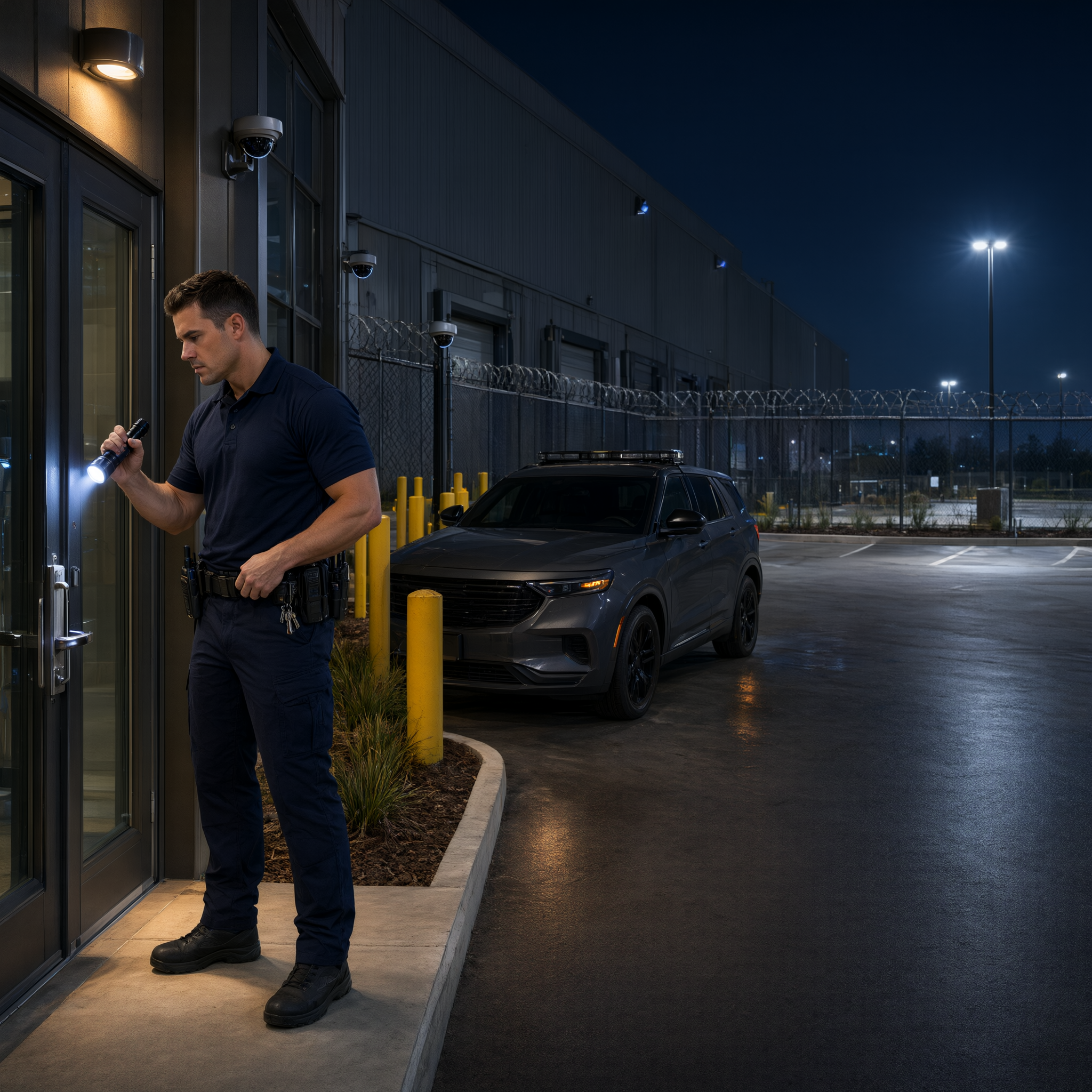
Unlike a permanently stationed security officer, mobile patrol officers move between designated locations according to an established patrol plan. Their responsibilities may include perimeter inspections, access-point checks, alarm response, identifying signs of intrusion, monitoring parking areas, checking doors and gates, and reporting conditions that could create a security or safety concern.
A successful mobile patrol operation depends on more than simply driving from one location to another. It requires planning, trained personnel, clear procedures, accurate reporting, and the ability to adapt when conditions change.
What Is Mobile Patrol Security?
Mobile patrol security is a security service in which trained officers use vehicles, and when appropriate conduct foot inspections, to monitor one or more properties or designated areas.
Patrols can be scheduled at specific times or incorporated into a broader patrol strategy that prevents security activity from becoming completely predictable. Depending on the property and its risk profile, officers may inspect entrances, gates, parking areas, loading zones, exterior buildings, restricted areas, vacant properties, and other locations identified in the security plan.
The purpose is not simply to create visibility. A properly managed patrol should help identify problems early, provide a documented security presence, and ensure that incidents are communicated through the appropriate channels.
How a Professional Mobile Patrol Operation Is Structured
A reliable patrol service normally begins before the officer arrives at the property.
1. Site Assessment and Patrol Planning
Every property has different security requirements. A retail location may require attention around entrances, delivery areas, and parking spaces, while an industrial site may require greater emphasis on perimeter fencing, equipment yards, storage areas, and restricted access points.
A patrol plan should identify:
- Areas that require regular inspection
- Entry and exit points
- Gates, fences, and perimeter boundaries
- Vulnerable or isolated locations
- Alarm or access-control points
- Emergency contact procedures
- Areas requiring additional attention after business hours
- Reporting and escalation requirements
Security planning should be based on the actual risks and operating conditions of the property rather than relying on a one-size-fits-all patrol routine.
2. Officer Preparation Before Patrol
Professional patrol begins with preparation.
Before starting a patrol, officers should understand the site instructions, communication procedures, assigned route, reporting requirements, and any current security concerns. Vehicle and equipment checks are also important because patrol officers may need to remain mobile for extended periods.
Depending on the assignment, patrol equipment may include communication devices, a flashlight, identification, documentation tools, first-aid supplies, and other equipment authorized by the security provider and applicable regulations.
Clear preparation reduces avoidable delays and helps officers concentrate on observation and response.
3. Conducting the Patrol
During a patrol, officers should actively observe the property rather than simply pass through it.
A professional inspection may involve checking:
- Doors and windows for signs of forced entry
- Gates and perimeter fencing
- Parking areas and vehicles
- Exterior lighting
- Restricted or sensitive areas
- Signs of vandalism or property damage
- Unusual activity around the property
- Fire or safety hazards that require reporting
- Conditions that differ from normal site activity
The exact inspection points should be determined by the property's security plan.
Observation is particularly important because security concerns are not always obvious. A damaged lock, open gate, broken light, unfamiliar vehicle, or unusual activity may provide an early indication that further investigation or escalation is necessary.
4. Responding to Alarms and Incidents
Mobile patrol officers may also be assigned to respond to alarms or reported incidents.
An effective response should follow the established site procedure rather than relying on improvisation. Officers assess the situation, maintain appropriate personal safety, observe relevant conditions, and notify the responsible parties or emergency services when required.
Security personnel should understand the limits of their authority and follow applicable laws, company procedures, client instructions, and escalation protocols.
The objective is not to take unnecessary risks. The objective is to identify what has happened, protect people and property within the officer's role, communicate accurate information, and ensure the appropriate response is initiated.
5. Documentation and Incident Reporting
One of the most important parts of mobile patrol security happens after an observation or incident: documentation.
A useful patrol report should clearly record what happened, where it happened, when it was observed, what actions were taken, and who was notified.
For example, instead of writing:
“Gate was damaged.”
A stronger report could document:
“During the 11:40 p.m. perimeter inspection, the east service gate was found partially open with visible damage to the locking mechanism. No person was observed in the immediate area. The site supervisor was notified and the condition was recorded for follow-up.”
Accurate reporting creates an operational record that can help property managers identify recurring issues, investigate incidents, and evaluate whether additional security measures are required.
6. Using Technology to Strengthen Patrol Operations
Modern patrol operations can combine physical security with technology.
Depending on the service and site requirements, technology may support:
- GPS-based patrol verification
- Digital checkpoint systems
- Mobile incident reporting
- Time and location records
- Photographic evidence
- Communication between officers and supervisors
- Alarm notifications
- Access-control information
- Centralized security records
Technology should support the officer rather than replace professional judgment. A digital record can show that a checkpoint was visited, but the quality of the patrol still depends on what the officer actually observes and reports.
Scheduled and Variable Patrols
There is no universal patrol schedule that works for every property.
Some clients require patrols at specific times, such as opening and closing periods. Others may require coverage during overnight hours or when a property is vacant.
Where appropriate and permitted by the security plan, varying patrol timing and routes can make security activity less predictable. However, unpredictability should never interfere with required inspections, contractual obligations, emergency response requirements, or accurate reporting.
The patrol strategy should always reflect the property's risk assessment and operational requirements.
Common Areas That Require Mobile Patrol Attention
Mobile patrols can be particularly useful for properties where a single stationary security post cannot provide effective coverage of the entire area.
Common patrol locations include:
Commercial Properties
Officers may inspect entrances, parking areas, delivery zones, exterior doors, and perimeter areas.
Construction Sites
Patrols may focus on unauthorized access, perimeter breaches, equipment areas, material storage, and signs of vandalism.
Industrial Facilities
Large industrial properties may require inspection of gates, warehouses, vehicle areas, restricted zones, and exterior infrastructure.
Vacant Properties
Empty buildings can become vulnerable to unauthorized entry, vandalism, theft, and property damage. Regular patrols can provide an active security presence and identify issues before they become more serious.
Residential Communities
Patrol officers may monitor entrances, common areas, parking facilities, perimeter roads, and other designated locations.
What Makes a Mobile Patrol Program Effective?
The strongest patrol programs combine several elements rather than depending on vehicle visibility alone.
Clear Site Instructions
Officers should know exactly what they are expected to inspect, document, and report.
Trained Security Personnel
Security officers need appropriate training for observation, communication, incident reporting, emergency procedures, and the specific responsibilities of their assignment. Professional security programs should also include appropriate selection, training, and ongoing evaluation of personnel.
Reliable Communication
Officers need dependable methods for communicating with supervisors, clients, and emergency contacts when required.
Consistent Documentation
Reports should be clear, factual, timely, and useful to the people responsible for managing the property.
Regular Review
Security requirements can change. New construction, changes in occupancy, repeated incidents, environmental changes, or operational changes may require the patrol plan to be reviewed and adjusted.
Mobile Patrol Security Is More Than a Vehicle on the Property
A patrol vehicle can provide visibility, but effective mobile security goes much further.
The real value of a professional patrol operation comes from the combination of trained personnel, structured procedures, active observation, reliable communication, accurate reporting, and an understanding of the property's specific risks.
For property owners and security managers, this approach creates a more organized way to monitor locations that may be too large, distributed, or operationally complex for a single fixed security post.
Final Thoughts
Mobile patrol security works best when it is treated as a complete security operation rather than simply a driving service.
From the initial site assessment to patrol planning, officer preparation, property inspection, incident response, and detailed reporting, every stage contributes to the effectiveness of the overall program.
A well-designed patrol strategy should remain aligned with the property's changing security requirements and should provide security teams with the information, procedures, and resources needed to perform their responsibilities professionally.
For organizations managing multiple properties, large sites, vacant buildings, commercial facilities, or areas requiring periodic security checks, a structured mobile patrol program can become an important part of a broader physical security strategy.
You Might Also Like
 Professional Development
 Loss Prevention
 Security Officer Career Growth
 CCTV & Surveillance
Ready to See Geo Guard Pro in Action?
14-day free trial. No credit card. No lock-in.