Essential Equipment That Helps Security Officers Perform Their Duties Effectively
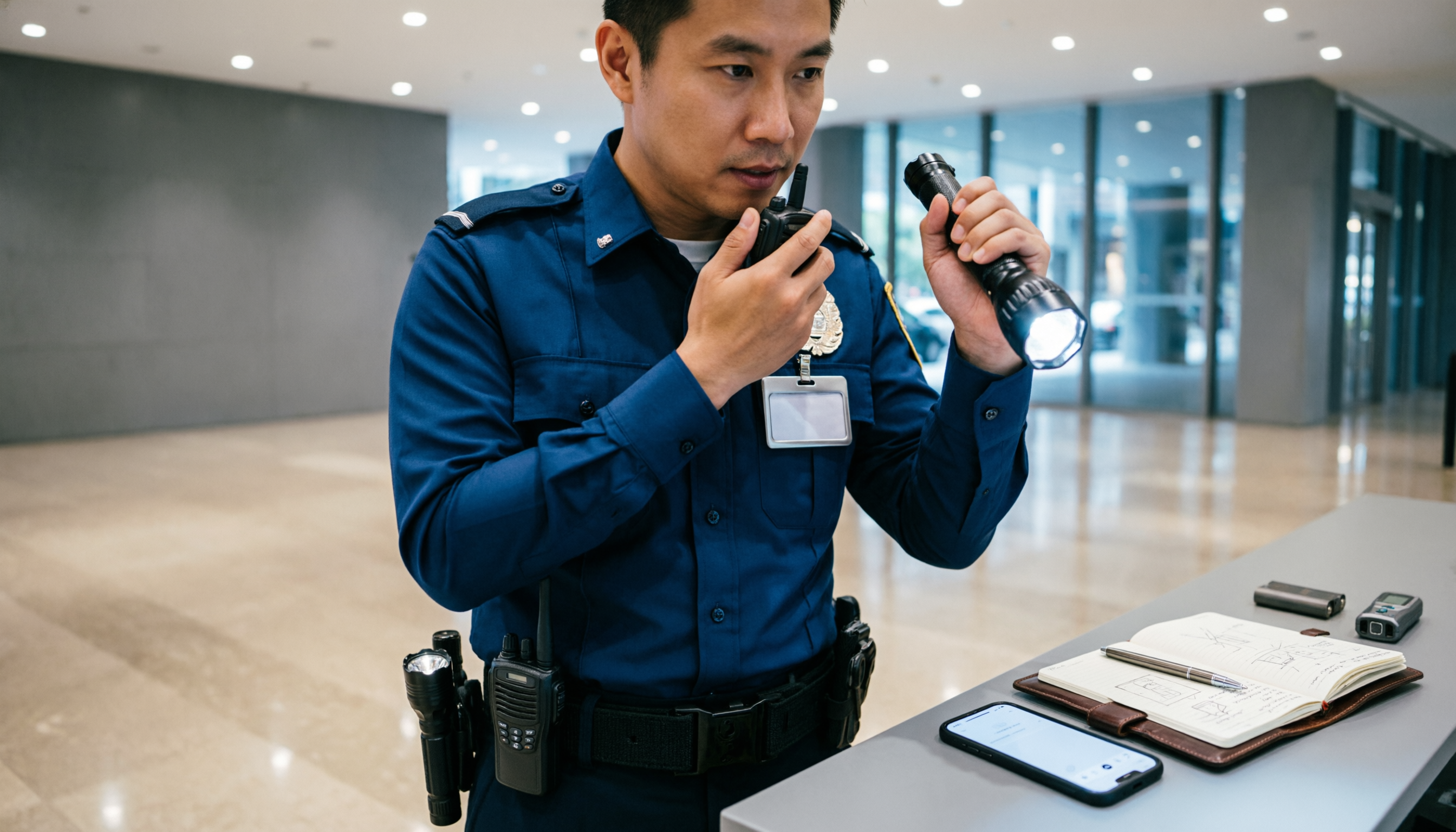
Security officers work in a variety of environments and may face different operational requirements throughout their shifts. Having appropriate equipment can help them communicate effectively, remain prepared, document important information, and carry out their assigned responsibilities more efficiently.
The equipment required can vary depending on the location, duties, working conditions, and policies of the organization. Selecting practical and reliable equipment is therefore an important part of maintaining an organized security operation.
Why the Right Equipment Matters
Security officers need to remain alert and prepared while carrying out their duties. Suitable equipment can help support communication, observation, documentation, and routine security activities.
The right equipment can help officers:
- Communicate quickly with supervisors and team members.
- Record important information.
- Maintain visibility during patrols.
- Respond more effectively to routine situations.
- Access relevant digital systems.
- Perform assigned duties more efficiently.
Equipment should always be selected according to the actual requirements of the assignment.
Communication Equipment
Clear communication is essential for security teams. Two-way radios are commonly used to allow officers to communicate with supervisors and other members of the team.
Depending on the workplace, security personnel may also use mobile phones or approved digital communication platforms.
Communication equipment should be reliable, properly maintained, and used according to company procedures.
Flashlights and Visibility Equipment
Security officers may work during evenings, overnight shifts, or in areas with limited lighting. A reliable flashlight can help officers observe their surroundings and navigate dark areas safely.
For outdoor assignments, visibility equipment may also be appropriate depending on the working environment and safety requirements.
Equipment should be checked regularly to ensure it remains ready for use when needed.
Identification and Access Credentials
Security officers should have appropriate identification that clearly establishes their role when required by the assignment.
Access cards, identification badges, or other credentials may also be necessary for entering authorized areas or using workplace security systems.
These credentials should be protected and handled according to organizational policies.
Documentation Tools
Accurate documentation is an important part of security operations. Depending on the organization, officers may use notebooks, forms, smartphones, tablets, or digital reporting systems to record patrol activities and incidents.
Good documentation should be clear, factual, and completed according to established procedures.
Digital reporting tools can also make it easier for supervisors to review information and maintain organized security records.
Protective and Safety Equipment
Some security assignments may involve environmental or workplace hazards. In such situations, officers may require appropriate protective equipment based on the risks associated with the location.
This can include items such as high-visibility clothing, protective footwear, gloves, hearing protection, or other workplace-specific safety equipment.
The required equipment should be determined through the site's safety requirements and risk assessment.
Equipment for Patrol Duties
Security officers conducting patrols may require equipment that supports mobility, communication, observation, and documentation.
Depending on the assignment, this may include:
- Communication devices.
- Flashlights.
- Identification credentials.
- Mobile or digital reporting devices.
- Weather-appropriate equipment.
- Required protective equipment.
Patrol equipment should be lightweight, practical, and suitable for the working environment.
Choosing Equipment for Different Assignments
Not every security officer needs the same equipment. A corporate office, construction site, warehouse, residential community, and outdoor facility can have very different requirements.
For example, an officer working at a construction site may require additional visibility and protective equipment, while an officer working in a corporate building may rely more heavily on access control, communication, and digital reporting tools.
Understanding the assignment before selecting equipment helps organizations avoid unnecessary equipment while ensuring officers have what they actually need.
Maintaining Security Equipment
Providing equipment is only the first step. Regular inspection and maintenance are equally important.
Organizations should establish procedures for checking equipment, replacing damaged items, charging electronic devices, and reporting equipment that is no longer functioning properly.
Security officers should also report missing or damaged equipment promptly so that operational issues can be addressed before they affect security duties.
Training Officers to Use Equipment Properly
Security equipment is most effective when officers understand how to use it correctly.
Training should cover the equipment relevant to each assignment and explain how it should be handled, stored, maintained, and reported.
Officers should also understand any company policies governing the use of communication devices, digital systems, identification credentials, and other work equipment.
Supporting Professional Security Operations
Well-maintained equipment can contribute to a more organized security operation, but equipment alone cannot replace proper training and professional judgment.
Effective security depends on the combination of trained personnel, clear procedures, suitable technology, and reliable equipment.
When these elements work together, security officers are better positioned to perform their responsibilities consistently and professionally.
Conclusion
The right equipment can make a significant difference in how effectively security officers perform their daily responsibilities. Communication devices, flashlights, identification credentials, documentation tools, and appropriate safety equipment can all support different aspects of security work.
However, equipment requirements should always be based on the specific assignment and working environment. Regular maintenance, proper training, and clear company procedures are equally important.
By providing security officers with practical and well-maintained equipment, organizations can support safer, more efficient, and more professional security operations.
You Might Also Like
 Professional Development
 Loss Prevention
 Security Officer Career Growth
 CCTV & Surveillance
Ready to See Geo Guard Pro in Action?
14-day free trial. No credit card. No lock-in.